by Richard Triggs | Sep 11, 2024 | Blogs, Uncategorized
Over my 20-plus years as an executive recruiter, it has been interesting to watch the evolution of the debate around diversity in the workplace, especially at a senior executive level. What was once regarded as ‘nice to have’ has now become in many instances mandatory. On multiple occasions, we have been engaged by ASX100 companies specifically to headhunt women for key appointments to meet a gender diversity target.
Now diversity extends far beyond just gender to include sexual orientation, ethnicity, age, people with disabilities, and increasingly people from an Indigenous background (especially at board level). I’m certainly a big advocate for diversity and highly encourage our clients to step beyond their traditional avatar of what makes a good employee. It’s also essential that there is a commonsense approach to ensuring that even when hiring for diversity, the appointed candidate is equally well credentialed based on merit. These people definitely exist. The challenge becomes how to find and attract these people to your organisation. Here’s a real-world example:
A few years ago I was at a gender diversity debate dinner, one of only a handful of men in a room surrounded by at least 150 women. It would be fair to say there was a lot of heated commentary about the ‘patriarchy’, the ‘glass ceiling for women’ and similar statements. So I decided to do a bit of an investigation. In the previous month, we had recruited four C-suite roles (CEO, CFO, COO and the like), three of which were for not-for-profits. In every instance, the client had specifically said that they would love to employ a woman.
Across the four roles, we had 800 unique applicants to our advertisements. What percentage of these do you think were women? Seven per cent! Fortunately, we are headhunters, so we are not reliant on ad response to fill our vacancies. If women truly want these opportunities yet aren’t applying, what’s going on? This is definitely a generalisation, but often if a female candidate reads an advertisement that calls for ten criteria and she believes she only has seven or eight, she often won’t feel it’s worth applying as she is underqualified. On the other hand, if a man reads the same advertisement and believes he only has three, he’ll think he’s absolutely the best candidate for the job! (Once again, yes, I know I’m generalising; however, it is a common scenario.)
What’s the answer? If you legitimately want to hire for diversity, you need to accept that you are very unlikely to get the right quality and quantity of candidates from advertising alone (whether you’re seeking gender diversity or otherwise). You need to headhunt these people because they are generally in higher demand, not actively looking, and may be less likely to apply (as mentioned above). Hiring for diversity is an excellent thing. Hiring exceptionally talented people who have proven key achievements and transferable skills is also a great thing. Don’t fall into the trap of hiring people purely to achieve a diversity target.
Employ the best person, who also happens to bring diversity to your team. Hiring policies that include both attributes, versus one or the other, is where the gold lies. Do this consistently and you will have an amazing business.
Published Bsale Magazine | Expert Advice and Insights on Business Sales
Author: Richard Triggs
www.areteexecutive.com.au
Author of* *Winning the War for Talent.
by Richard Triggs | Feb 11, 2024 | Uncategorized
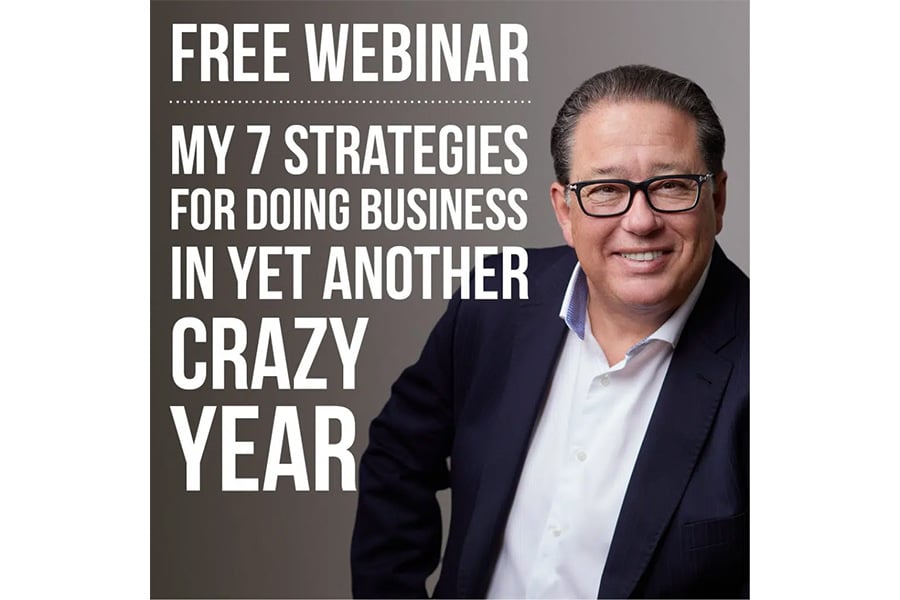
Well we ended 2021 filled with hope for a better year. That didn’t really work out that well did it? After two years of never ending COVID related challenges, that will linger regardless of the changes to the various restrictions, it’s time to get on with business. But a lot has changed in these two years and that’s what I’d like to share on this webinar, along with my very specific strategies for doing business in yet another crazy year.In this webinar I’m going to share –
– The one thing we need to take into consideration with everything we are doing.
– The big opportunity that exists in 2022 – that few businesses will take advantage of.
– A number of aspects to our business that we need to rethink this year.
– The stories we need to rewrite and reshare.
– Moving from cross industry innovation to cross industry inspiration.
All in all, I’ll be sharing 7 key strategies that apply to small business and big business alike. As Australia’s #1 small business author, I feel very strongly about the strategies I’m going to be sharing. In fact I think that those businesses that truly embrace them will have a huge competitive advantage in the years ahead.
So please tune in. This webinar is free. There is nothing being sold. It’s a 100% inspired event to help you get your business on the right path as 2022 evolves. https://us02web.zoom.us/…/reg…/WN_VrIpVnF_Qe-2NQSUrufNZA
Cheers,
Andrew
PS If you’d like the recording of this webinar please register. Everyone who registers will automatically be sent a link to the recording.

by Richard Triggs | Feb 11, 2024 | Uncategorized
We live in a world that is obsessed with everything new. I don’t think there has ever been a time where consumers crave new as much as they do today. So if your business has mastered the art of coming up with new products and services, it’s time to question whether or not you are making the cardinal sin of forgetting to tell your customers about them?
I see this a lot in small businesses everywhere. I literally stumble across a new product or service, one that I would have bought ages ago if I knew it existed, but the business owner simply didn’t think to mention it. They assumed that everyone would figure it out. This is a very dangerous assumption to make in any business.
There are two key considerations here. The first is to make sure you are educating your customers about anything and everything new with every medium possible and the second is to keep educating them, don’t assume one email has the problem solved. Remember it is your job to educate them, not their job to automatically know what is going on in your business.
To dive a little deeper, we all have a range of mechanisms to update customers about anything new going on in our business.
Off the top of my head here are just a few:
- Social media
- On your website
- On your blog
- Through email (and email signatures)
- Pick up the phone and tell them
- On your invoices
- Signage on your vehicle
- In your waiting room
- Send a letter
- On your phone message
- Signage
- In your advertising
Of course it depends on the kind of business you run, but I think you get the point. Then the question is how long do we need to keep telling people about this new product or service? How long is too long? These are tough questions to answer.
Various research will say that a person needs to hear a message somewhere between 7 and 10 times before it sinks it. I don’t think it is that clear. Personally I tend to hear a message much faster when it is relevant to me. For example a discounted airfare to Alice Springs doesn’t even reach my radar, but a cheap airfare to Sydney certainly does.
The moral to the story is that these days there is no one single communication mechanism that captures everyone and there are different things that different people are attuned to listen out for (mostly subconsciously). This means that you have to communicate the new products or services often, across all of the various forms of media. Most people don’t – and that’s the problem and the missed opportunity.
Don’t assume everyone has heard your message when you get tired of hearing about it or reading it. Odds on they haven’t. Balance this against whether or not people are buying your new product or service or acting accordingly to what has changed in your business (for example perhaps you have extended your trading hours – is anyone coming at the new times?).
Doing business is complicated and communication is still the most vital element when it comes to building your customer base. Communicate loudly, clearly and often and you will notice a dramatic difference. Remember it’s your job to tell your customers what’s new, it’s not theirs to try and figure it out.

by Richard Triggs | Feb 11, 2024 | Uncategorized
Well the year is up and running and it looks like we might just be able to get in front of audiences again. If you’re anything like me, the last two years have seen you delivering a gazillion ZOOM presentations, but not a lot of face to face live events.
I did my first live gig a few weeks back in Sydney and I have to say, I was a bit rusty. In fact we all were – the AV team, the audience, the event organisers, the venue and the other speakers. Add to that the fact that a lot has changed since most of us were on stages, with what our audiences want and what events look like, and now is the time to regroup a little and get our heads right around our speaking.
So I decided it was time to put on a free webinar – “IT’S TIME TO GET YOUR SPEAKER MOJO ON IN 2022”. I’m going to share my 10 key thoughts, trends, ideas and strategies that every speaker needs to consider going into 2022 and beyond.
I’m delivering this from the perspective of people who are booking us (I’ve had a huge surge in speaker bookings in the last few weeks) as much as from the perspective of getting up on a stage with wobbly legs.
If you’d like to come along, this 60 minute webinar will be held at 11am on the 17th March (SYD/MEL time). If you can’t make it but you’d like a recording – register anyway and you’ll get access.
I’m really looking forward to sharing my thoughts to help you get your Speaker Mojo on in 2022.
Cheers,
Andrew
https://us02web.zoom.us/webinar/register/WN_YGFXG1WqSN61voUq-qR6OA

by Richard Triggs | Feb 11, 2024 | Uncategorized
THE STEPS BUSINESS OWNERS NEED TO TAKE WHEN IT COMES TO RECOVERING FROM FLOODS (AND OTHER NATURAL DISASTERS).
Once again we’re a country with many people and businesses impacted by natural disaster. No matter how often it happens, or the type of disaster, it’s incredibly challenging. When it comes on top of fires, pandemics, wars and who knows what else, it’s especially tough.
Here’s an article I wrote a while back outlining the steps to take when a business has been badly damaged by natural disaster. I hope it helps people in need.
Take care,
Andrew
YOUR BUSINESS HAS BEEN DAMAGED OR DESTROYED BY A NATURAL DISASTER – WHAT NOW?
Business owners have to somehow manage this and when faced with disaster, figure out how to pick up the pieces and start again.
To try and support people in this position I have written “10 STEPS TO HELP YOU REBUILD.” These are pretty simple ideas, really written just to provide a check list for those people finding themselves a little overwhelmed and in the “what now” stage. Please pass this article onto anyone who may need some help. Having a simple process to follow can go a long way to giving focus, clarity and most importantly hope.
1. Set up communication to the outside world
The first step in the rebuilding process is to make sure you are connected to the outside world and this normally means a working telephone. It might just be your mobile for now, but you can get your main business line diverted to the mobile for the time being. At least you can get calls and stay in touch with people trying to contact you.
Having an internet connection and email is also important to get set up. It might mean hiring some computer equipment or getting your mobile phone set up for internet connection (if you haven’t already) but much of the rebuilding information will come via the internet. With social media such as Twitter and Facebook, there is some incredibly helpful information coming through all the time and if you are connected, you can benefit from it.
Even setting up a TV in your building helps. It feels like you are connected to the outside world and not feeling quite as isolated. Do whatever you can to get connected and in touch with the outside world, even by doing something as simple as talking to a neighbour you haven’t met before.
2. Break the rebuilding process into smaller, more manageable chunks
When standing in a devastated office, shop of factory, the amount of things that need to be done can be totally overwhelming. The best way to deal with this is to break the big and overwhelming “to do’s” into small more manageable chunks. This is a great philosophy for life and it will certainly help at a time like this. Whenever you find yourself starting to feel overwhelmed about what needs to be done – start on the smaller jobs, one by one, and before you know it you will be back on track.
3. Let your suppliers know what is going on – they will want to help
Remember that if your business is not making money neither are your suppliers, so it is in their best interest to help you get up and running as quickly as possible. Even though it might be a few weeks before you are ready for stock or replacement equipment, place the order now so that you are in the system. If promotional material is destroyed, let them know so you can get some more on the way. Talk about payments – it is better to be upfront and clarify what you need, especially if there is an insurance claim pending. You might be surprised how flexible your suppliers will be. The more your communicate with them the better off you will be.
4. Talk to your bank and credit card providers
Cash flow is going to be a big issue, particularly in the short term. Make the call to your bank and to any institution where you have credit and let them know what has happened. Most of the time they will be incredibly supportive by deferring repayments. Regardless of whether you need this right now or not, it is good to know that you have it available.
On another note, if you take credit cards in your business you might want to get a hold of secondary way to take payments, one that doesn’t rely on a fixed NBN feed or power supply. Down time due to power cuts or telephone upgrades can mean lost sales – and during the clean up and rebuild there will be many down times. I know businesses that even revert to the manual click clack machine to take credit card payments at times like this. It’s a little tougher but always an option.
5. Talk to the ATO
The ATO might be the last people you want to talk to in the midst of a major disaster, but from my experience they can really help. They will be able to give you advice, support and in reality, they can take some of the financial burden from you with revised payment plans for paying tax.
Why is this so important now? One of the biggest fears for business owners facing a rebuild of their business is the cost. Who knows how much money will be needed or how long it will take to start trading again? The less pressure you have on you, particularly financial, the better. If you don’t have to worry about your mortgage for three months, that is a big relief. Likewise if you can defer your tax payments, you get some breathing space. Sure, you still have to pay, but right now the focus is on getting the business operation again so you can some cash flow.
6. Keep your staff informed
This is a tough time for employees in small businesses in particular. They know that the business owner generally doesn’t have a lot of money and with none coming in, plus the cost of the rebuild, their job is in jeopardy. Which is of course the truth. Tell your staff what is happening, be honest and lay it on the line. As hard as it is, the pressure of doing what you need to do as well as trying to protect your staff from hard news is simply too much. You might just be surprised by the response from your staff – most will roll up their sleeves and do what they can to help, regardless of whether they are getting paid or not.
Talk to the Government relief organisations – they might be able to give your staff some funding and let them keep working to help you rebuild the business.
7. Keep new records, take photos, keep samples of damaged stock and equipment
When confronted with a pile of rubble or a foot of mud, our initial desire is to get rid of it all so that we can start with a clean slate. But it is important to take photos along the way that show the extent of the damage to stock, to buildings and to equipment. This is important for insurance claims, many of which won’t be paid unless there is some record or proof of damage.
My advice is that you keep a small pile somewhere of damaged stock or equipment. Take as many photos as you can and keep a journal of what you throw out and when you threw it out.
8. Manage your physical and emotional wellbeing
It is very easy to get sick at a time like this. The emotional toll is enormous, something we can easily overlook. Add to this working long hours in less than ideal conditions and the potential to get really ill is extremely high. You simply have to take care of yourself as this is a marathon event.
This means eating as well as you can, drinking lots of water, resting and sleeping as often as you can. Once you have finished the rebuilding stage you will need your energy to drive the business forward. Reach out to other business owners who are going through the same thing and encourage them to take a break, have a drink and pace themselves.
9. Let your customers know what is going on
As soon as you are operating again, even if it is in reduced capacity, hang that shingle out, turn on the lights and yell it from the street corner. It is vital that you get customers coming back to your business and spending money as quickly as possible and believe me, they will want to support you and your business.
The key here is to keep your customers informed about the progress of your business restoration. When you do open up be sure to ask your customers to tell their friends that you are open and trading.
10. There is always an upside – this is the opportunity to rebuild your business the way you have always wanted it to
I know that it is hard to see the upside or the bright side of things at a time like this, but life somehow always seems to give us an unexpected positive when faced by adversity. I feel that in this instance it is a chance to think about your business, the changes you have been meaning to make but never quite seem to get around to.
It is the opportune time to think about your future, what you want out of your business and where you are heading. It is a time to rebuild not just your business but your dreams and your goals.
Most importantly it is a time to think about what you have, not what you have lost, and to be grateful.