How to Find and Win your next leadership role

How to Find and Win your next leadership role

New Podcast Episode: The People Leaders Podcast with Jan Therkelsen

Looking for something insightful to listen to while you’re working or on the go? In this episode of The People Leaders Podcast, I had the pleasure of sitting down with Jan Therkelsen to discuss the ever-evolving landscape of executive leadership, career progression, and how to stand out in today’s competitive job market.

Whether you’re an executive considering your next career move, an employer looking to attract and retain top talent, or simply someone interested in leadership strategies, this episode is packed with valuable insights to help you stay ahead.

What We Cover in This Episode

  • Recognising When It’s Time for a Career Move – What are the signs that it’s time to take the next step in your career? We discuss how self-awareness and career planning can help you make the right move at the right time.
  • How to Stand Out in Job Interviews – Key strategies for making a lasting impression and positioning yourself as the ideal candidate.
  • The Hidden Job Market – Why many of the best executive roles are never advertised and how you can tap into these opportunities.
  • The Power of Networking & Personal Branding – How building genuine connections and positioning yourself effectively can create new career opportunities.
  • What Employers Look for in Top Talent – The essential skills and attributes that employers are prioritising in today’s market.
  • The Importance of Continuous Learning & Development – How executive education and professional development can set you apart.

Why You Should Listen

With my experience as the Founder & CEO of Arete Executive, I’ve worked closely with organisations and senior executives to help them navigate the complexities of executive search, recruitment, and career progression. In this episode, we take a deep dive into practical strategies that job seekers, leaders, and hiring managers can implement immediately.

If you’re currently exploring career opportunities, looking to attract top talent, or simply want to refine your leadership skills, this episode is a must-listen.

Listen Now

🎧 Tune in to the full episode here:
Listen on Spotify

I’d love to hear your thoughts—what career or leadership strategies have worked for you? Leave a comment or reach out to continue the conversation.

Five ways to attract top performers

Five ways to attract top performers

Great candidates have many options when considering a new job. Richard Triggs MAICD, founder and CEO of executive search specialists Arete Executive, says these five simple strategies will help organisations improve their ability to attract and retain top performers.


1. Use LinkedIn to sell yourself as a leader of choice

Most senior executives and board directors have a LinkedIn profile. Yet for the vast majority, their profile is just a summary of their career history, with limited detail about their career achievements and what makes them an excellent leader.

When a prospective employee looks at your LinkedIn profile, they ask themselves, “Is this person reputable? Can they mentor and coach me to achieve my highest potential? Can they solve the problems I’m currently experiencing in my career?”

You need to make sure your LinkedIn profile can pre-emptively answer these questions as quickly and positively as possible, as they apply to your employees of choice.

2. Ensure consistency of brand message across

LinkedIn profiles Most people write their own profiles, but many are not very good at it.

Have your marketing team, in conjunction with your HR team, determine what message you want to “sell” to prospective employees, then incorporate that into the profiles of your executives and board members.

You need to “sell the sizzle, not the steak” and ensure candidates are seeing that “sizzle” when investigating your organisation.

3. Dedicate a page on your website to attracting candidates

Companies spend a tremendous amount of money building and maintaining websites targeting their customers of choice.

Few spend anything to target their employees of choice. Are the profiles of your executives and board members easy to find and do they present them as employers of choice? Is your company doing new and innovative things, are you passionate about diversity, do you have an exciting and engaging vision and values?

Especially in the current market, what are you doing around workplace flexibility — working from home, telecommuting and so on? Be proud and shout it out loud.

4. Utilise social media platforms like YouTube and Instagram

Have you considered having a company podcast, where not only the executive and board teams, but also more junior employees can be interviewed about new projects, exciting achievements and why they love working for your company?

What about a video series on YouTube that does the same? If someone in your business wins a sporting challenge or does something great for charity, consider posting about it on Instagram as well as on LinkedIn.

Candidates love this stuff. Why are you an exciting company to work for? What makes you innovative and “sexy”? Again, shout it out loud.

5. Get your executives into the market

Are your executive leaders committed to building their own brands as leaders of choice? Are they speaking at conferences, appearing on podcasts or writing blogs?

If employees are your greatest asset, set KPIs around each leader’s activities in doing such tasks. “What gets measured gets done”. It is not enough for senior leaders to say they are “too busy doing their day job”.

Perhaps they would be less busy and could focus on more strategic imperatives if they were attracting the top talent to allow them to do so.

Following these five easy, inexpensive steps will greatly enhance your own and your organisation’s profile. Attracting and retaining top talent can deliver a strategic advantage over your competitors, it makes sense to give it the attention it deserves.

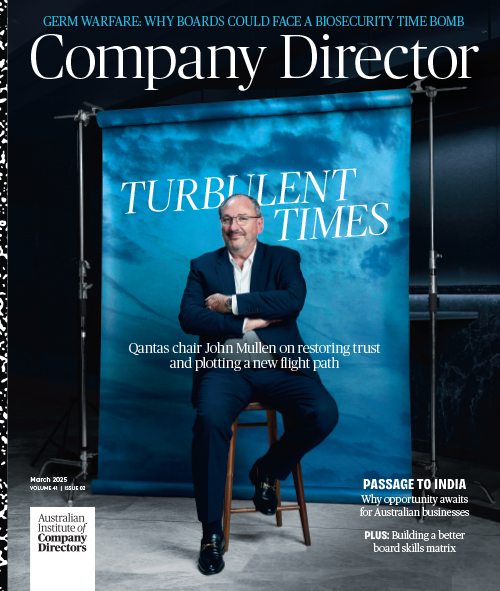
This article first appeared under the headline ‘Five ways to attract top performers to your board and executive team’ in the March 2025 issue of Company Director magazine.


Australia's leading magazine for directors.

Australia’s leading magazine for directors.
Qantas chair John Mullen on restoring trust and plotting a new flight path
March 2025 edition
Why Most Companies Struggle with Recruitment – and How to Fix It

Why Most Companies Struggle with Recruitment – and How to Fix It

Why Most Companies Struggle with Recruitment – and How to Fix It

In a recent episode of the Confessions of a Recruiter podcast, I had the opportunity to discuss one of the biggest challenges businesses face today: recruitment. The truth is, most employers are terrible at recruiting. But it’s not necessarily their fault—many internal recruitment teams are under-trained, poorly managed, and stretched too thin.

The Myth of the “War for Talent”

There’s a common belief that hiring top talent is a war, a battle between companies trying to secure the best professionals. But in reality, there’s no war—there are just companies that know how to recruit well, and those that don’t.

The reason some businesses struggle isn’t due to a lack of talented candidates but rather an ineffective hiring process. Many organisations approach recruitment reactively instead of strategically, leaving them at a disadvantage.

Internal Recruitment Teams Are Overwhelmed

One of the key points I made in the podcast was that internal recruiters are often overloaded with work. In many companies, HR teams are expected to handle 40 to 60 roles at a time, making it nearly impossible to give each hiring process the attention it deserves. This leads to:

  • Poor candidate experience – Slow response times, unstructured interviews, and weak engagement turn top candidates away.
  • Missed opportunities – Companies often fail to attract the best talent because they don’t have a proactive strategy.
  • Rushed and ineffective hiring – HR teams are forced to fill roles quickly, leading to poor hiring decisions and higher turnover.

Why I Wrote Winning the War for Talent

This is exactly why I wrote Winning the War for Talent—to educate businesses on how to recruit more effectively. Many companies think the solution is always outsourcing to recruitment agencies, but that’s not necessarily the case.

Instead, companies need to learn how to build a high-performing recruitment process internally. This means:

✅ Training internal teams to source, attract, and retain top talent
✅ Implementing a structured and strategic hiring process
✅ Reducing dependency on external recruiters by improving in-house capabilities

How Recruitment Coaching Can Help Your HR Team

If your internal HR team is struggling to hire the right people, there’s a solution. I offer recruitment coaching to help companies build a strong, scalable hiring process.

With the right training and strategy, your team can:

  • Identify and attract top talent before competitors do
  • Improve hiring decisions, reducing turnover and costly mis-hires
  • Build a recruitment process that works for long-term success

If your company wants to hire better, faster, and smarter, let’s talk.

📩 Get in touch to learn more about recruitment coaching [email protected]

🎥 Watch the full podcast episode here: https://youtu.be/nuPqlCakP38


Building Strong Teams for Success

Building Strong Teams for Success

In this episode of Grow a Small Business, host Troy Trewin interviews Richard Triggs, founder of Arete Executive, discusses his journey of scaling his business from just two to fourteen team members. He shares key strategies for effective hiring, managing partnerships, and supporting businesses of all sizes. Richard also talks about the challenges and rewards of building a strong, dynamic team. Tune in to hear his insights on navigating growth and success in the business world.

Other Resources:

Why would you wait any longer to start living the lifestyle you signed up for? Balance your health, wealth, relationships and business growth. And focus your time and energy and make the most of this year. Let’s get into it by clicking here.

Troy delves into our guest’s startup journey, their perception of success, industry reconsideration, and the pivotal stress point during business expansion. They discuss the joys of small business growth, vital entrepreneurial habits, and strategies for team building, encompassing wins, blunders, and invaluable advice.

And a snapshot of the final five Grow A Small Business Questions:

1. What do you think is the hardest thing in growing a small business?

Richard Triggs emphasizes that hiring the right people is one of the toughest challenges in growing a small business. Aligning hires with company culture, skills, and goals is critical, as poor team selection can have lasting consequences. He highlights the importance of a careful hiring process to scale effectively while balancing growth with operational needs.

2. What’s your favourite business book that has helped you the most?

Richard Triggs’ favorite business book that has helped him the most is Good to Great by Jim Collins. This book provides valuable insights into what differentiates successful companies from their peers and has been influential in shaping his business strategies.

3. Are there any great podcasts or online learning resources you’d recommend to help grow a small business?

Richard Triggs recommends leveraging podcasts and online learning resources that focus on leadership, recruitment, and business strategy to grow a small business. In his insights, he highlights the importance of continuous learning and suggests exploring programs that delve into effective hiring practices and building high-performing teams. While specific titles aren’t mentioned, he encourages entrepreneurs to seek resources that align with their business challenges and growth aspirations.

4. What tool or resource would you recommend to grow a small business?

Richard Triggs emphasizes the importance of tools and resources that streamline recruitment and team management to grow a small business effectively. He recommends leveraging applicant tracking systems (ATS) to optimize hiring processes and ensure the right cultural and skill fit for the business. Additionally, he advocates for using leadership development programs and engaging with experienced mentors or coaches to enhance team performance and business strategy. These tools and resources, he suggests, are key to building a sustainable and high-performing business.

5. What advice would you give yourself on day one of starting out in business?

Richard Triggs would advise his day-one self to focus on the importance of hiring the right people who align with the company’s values and culture. He would stress the value of strategic planning, understanding market needs, and being adaptable to change. Triggs also emphasizes seeking mentorship and building a strong network early on, as these relationships can provide guidance and open new opportunities.

Listen to the full interview on Spotify


Podcast episode with Magical learning

Podcast episode with Magical learning

In this awesome conversation, Richard Triggs shares his unique journey from aspiring rock star to successful recruitment consultant and author. He discusses the importance of understanding the job market, effective interviewing techniques, and the role of AI in recruitment. Richard emphasizes the need for organizations to balance love and accountability in leadership while fostering a culture of performance. He also highlights the significance of clear communication and relationships in achieving organizational success.

Retain Your Top Talent in an Era of High Turnover: Lessons from the Great Resignation

Retain Your Top Talent in an Era of High Turnover: Lessons from the Great Resignation

Retain Your Top Talent in an Era of High Turnover: Lessons from the Great Resignation

In today’s business climate, retaining top talent has become a critical challenge for CEOs and senior leaders. Over the past few years, many organisations have experienced a wave of departures, often labelled as the “Great Resignation.” But is this phenomenon as inevitable as it seems, or can proactive leadership practices curb its effects? The reality is, while the dynamics of employment have certainly shifted, leaders have more control over retention than they may realise.

Here are key strategies to help you retain high-calibre professionals in an era of high turnover, ensuring that your organisation not only holds onto its best people but strengthens loyalty and performance across the board.

1. Understand the Real Reasons Behind Turnover

Many leaders assume that turnover is primarily driven by salary competition or job flexibility alone. However, in my experience working with high-level executives, the deeper drivers are often issues of culture, recognition, and growth opportunities. To retain your top talent, it’s essential to regularly assess what is meaningful to your team beyond pay. Are they able to see a future in your organisation? Are they recognised and valued for their contributions?

A retention survey or periodic “stay interviews” can provide you with invaluable insights. Rather than waiting until someone is about to leave, these proactive conversations can reveal underlying issues, empowering you to make adjustments that prevent future exits.

2. Craft a High-Performance Culture That Inspires Loyalty

Employees who feel a strong alignment with their company’s mission and values are significantly more likely to stay. When a company’s culture is rooted in clear values and mutual respect, it creates an environment that naturally attracts and retains those who resonate with its mission. Leaders must model these values, consistently reinforce them, and ensure they permeate every level of the organisation.

A high-performance culture also emphasises accountability. When accountability is tied to meaningful goals, people are more motivated to contribute and less likely to disengage. For ASX-listed or high-growth companies, implementing regular goal-tracking and rewarding achievement is a powerful way to maintain engagement and performance.

3. Invest in Leadership Development and Succession Planning

One of the most common reasons for high-performing individuals to seek new roles is the absence of clear career progression. If your organisation lacks a structured leadership development program, you are likely losing valuable leaders to competitors who offer a clearer path to growth.

A well-planned succession strategy provides two major benefits. First, it gives high-potential employees a reason to stay, knowing they’re being groomed for future leadership. Second, it strengthens your organisation’s resilience by preparing you for inevitable turnover without disruption. A focus on internal mobility demonstrates to your employees that you’re invested in their futures as much as they are, increasing loyalty and decreasing the likelihood of unexpected departures.

4. Provide Flexibility – But with Structure

The shift toward remote and flexible work has been one of the most significant outcomes of recent years, and for good reason. Employees now expect a degree of autonomy over how they work. However, flexibility must come with clear expectations. By defining roles and goals while offering remote or hybrid options, you empower your team to perform at their best without feeling micromanaged.

Incorporate regular, intentional check-ins to keep team members aligned and connected to the organisation’s goals. A structured flexibility model respects employees’ preferences while maintaining the cohesion necessary for long-term success.

 5. Actively Celebrate and Reward Excellence

High-performing employees want to know their efforts are recognised. Create meaningful ways to celebrate achievements, whether through quarterly recognition programs, additional development opportunities, or public acknowledgment of contributions. Recognition is a powerful motivator, and it doesn’t always require financial reward—public praise, leadership opportunities, and personal development resources are all impactful incentives.

Closing Thoughts

The era of high turnover may present challenges, but it also brings opportunities for organisations to stand out as employers of choice. By understanding what motivates your top performers, building a strong culture, offering structured flexibility, and investing in leadership, you can create an environment where talent thrives and stays. As I often tell clients, retention is not a one-time task; it’s a continuous commitment to building a workplace where exceptional people want to remain.

If you’re ready to build a winning team that drives your organisation’s success and outlasts the trends, reach out to learn how we can partner to transform your recruitment and retention strategy.

PS. Are you looking to build a winning team that drives success and innovation? In today’s competitive landscape, recruitment isn’t just about filling vacancies – it’s about securing the right talent that aligns with your company’s vision and culture.
I’ve developed key strategies to help you attract top-tier executives, foster a performance-driven culture, and ensure your recruitment process becomes a critical advantage over your competitors.

Ready to take your hiring to the next level? Here are a few ways we can work together:
– Executive Recruitment: Secure the best talent for your leadership team.
– Recruitment Coaching: Enhance your HR/recruitment team’s capabilities and performance.
– Workshops & Keynotes: Empower your organisation with strategies for building winning teams.

Let’s chat! Email me at [email protected] to discuss how we can transform your recruitment process and position your business for long-term success.