


Retain Your Top Talent in an Era of High Turnover: Lessons from the Great Resignation

Retain Your Top Talent in an Era of High Turnover: Lessons from the Great Resignation

Retain Your Top Talent in an Era of High Turnover: Lessons from the Great Resignation

In today’s business climate, retaining top talent has become a critical challenge for CEOs and senior leaders. Over the past few years, many organisations have experienced a wave of departures, often labelled as the “Great Resignation.” But is this phenomenon as inevitable as it seems, or can proactive leadership practices curb its effects? The reality is, while the dynamics of employment have certainly shifted, leaders have more control over retention than they may realise.

Here are key strategies to help you retain high-calibre professionals in an era of high turnover, ensuring that your organisation not only holds onto its best people but strengthens loyalty and performance across the board.

1. Understand the Real Reasons Behind Turnover

Many leaders assume that turnover is primarily driven by salary competition or job flexibility alone. However, in my experience working with high-level executives, the deeper drivers are often issues of culture, recognition, and growth opportunities. To retain your top talent, it’s essential to regularly assess what is meaningful to your team beyond pay. Are they able to see a future in your organisation? Are they recognised and valued for their contributions?

A retention survey or periodic “stay interviews” can provide you with invaluable insights. Rather than waiting until someone is about to leave, these proactive conversations can reveal underlying issues, empowering you to make adjustments that prevent future exits.

2. Craft a High-Performance Culture That Inspires Loyalty

Employees who feel a strong alignment with their company’s mission and values are significantly more likely to stay. When a company’s culture is rooted in clear values and mutual respect, it creates an environment that naturally attracts and retains those who resonate with its mission. Leaders must model these values, consistently reinforce them, and ensure they permeate every level of the organisation.

A high-performance culture also emphasises accountability. When accountability is tied to meaningful goals, people are more motivated to contribute and less likely to disengage. For ASX-listed or high-growth companies, implementing regular goal-tracking and rewarding achievement is a powerful way to maintain engagement and performance.

3. Invest in Leadership Development and Succession Planning

One of the most common reasons for high-performing individuals to seek new roles is the absence of clear career progression. If your organisation lacks a structured leadership development program, you are likely losing valuable leaders to competitors who offer a clearer path to growth.

A well-planned succession strategy provides two major benefits. First, it gives high-potential employees a reason to stay, knowing they’re being groomed for future leadership. Second, it strengthens your organisation’s resilience by preparing you for inevitable turnover without disruption. A focus on internal mobility demonstrates to your employees that you’re invested in their futures as much as they are, increasing loyalty and decreasing the likelihood of unexpected departures.

4. Provide Flexibility – But with Structure

The shift toward remote and flexible work has been one of the most significant outcomes of recent years, and for good reason. Employees now expect a degree of autonomy over how they work. However, flexibility must come with clear expectations. By defining roles and goals while offering remote or hybrid options, you empower your team to perform at their best without feeling micromanaged.

Incorporate regular, intentional check-ins to keep team members aligned and connected to the organisation’s goals. A structured flexibility model respects employees’ preferences while maintaining the cohesion necessary for long-term success.

 5. Actively Celebrate and Reward Excellence

High-performing employees want to know their efforts are recognised. Create meaningful ways to celebrate achievements, whether through quarterly recognition programs, additional development opportunities, or public acknowledgment of contributions. Recognition is a powerful motivator, and it doesn’t always require financial reward—public praise, leadership opportunities, and personal development resources are all impactful incentives.

Closing Thoughts

The era of high turnover may present challenges, but it also brings opportunities for organisations to stand out as employers of choice. By understanding what motivates your top performers, building a strong culture, offering structured flexibility, and investing in leadership, you can create an environment where talent thrives and stays. As I often tell clients, retention is not a one-time task; it’s a continuous commitment to building a workplace where exceptional people want to remain.

If you’re ready to build a winning team that drives your organisation’s success and outlasts the trends, reach out to learn how we can partner to transform your recruitment and retention strategy.

PS. Are you looking to build a winning team that drives success and innovation? In today’s competitive landscape, recruitment isn’t just about filling vacancies – it’s about securing the right talent that aligns with your company’s vision and culture.
I’ve developed key strategies to help you attract top-tier executives, foster a performance-driven culture, and ensure your recruitment process becomes a critical advantage over your competitors.

Ready to take your hiring to the next level? Here are a few ways we can work together:
– Executive Recruitment: Secure the best talent for your leadership team.
– Recruitment Coaching: Enhance your HR/recruitment team’s capabilities and performance.
– Workshops & Keynotes: Empower your organisation with strategies for building winning teams.

Let’s chat! Email me at [email protected] to discuss how we can transform your recruitment process and position your business for long-term success.

3 tips to ensure you source the best performers

3 tips to ensure you source the best performers

Most organisations would agree that their greatest asset is their people.  So if you can source the best performers, then that gives you a tremendous competitive advantage in the market.  Yet most senior leaders find recruitment a challenge, thus continuing to buy into the misnomer that there’s a “war for talent”, good people are hard to find and having confidence that a new hire will perform well is at best a “lottery”.

The reality is that there are some companies who are great at hiring, whilst most lack the knowledge and skills to consistently and proactively secure top talent.  As an executive recruiter of over 20 years and having placed at least 1500 senior executives and board directors in my career, here are three tips for greatly improving your sourcing abilities.

  1. Understand explicitly what success looks like for the role you wish to recruit
    Most position descriptions are fairly generic and only offer a broad description of the role expectations.  However, every time you are recruiting a new role for your business, the key deliverables for the role will differ significantly based on the history of the role and the reason for the vacancy. Ask yourself, “what would this person need to deliver in the first three months, six months, twelve months and beyond, for me to be delighted with their performance?” Write down at least four or five key deliverables for each time period.  If there are multiple stakeholders involved, make sure everyone gets to contribute to this document (we call it a Performance Profile) to ensure everyone is on the same page.

You want to hire someone who has “done it before, done it well, and is motivated to do it again”.  Especially if you are delegating the candidate sourcing to internal or external recruiters, you need to tell them explicitly what you want.

 2. You must headhunt to secure the best candidates

Good employees are not actively looking for a new job.  They are in a role they enjoy, working for a boss they like, and being relatively well paid.  They are generally not looking at job advertisements or replying to LinkedIn inmails.  They are what we call passive candidates.  If you want to attract these people, you must headhunt them.  This means calling them in their workplace and engaging them in a conversation about your opportunity. Headhunting can be challenging if you are using an internal recruiter for your vacancy for a couple of reasons.  Firstly, they cannot do it confidentially, as they need to disclose who their employer is.  You may be looking to replace a poor performer, or you don’t want your competitors to know you are targeting their people.  Therefore confidentiality is a big issue.Secondly, your internal recruiters may be working on many vacancies at one time.  Headhunting is very time consuming, plus most recruiters don’t like to do it.  They may send a few LinkedIn inmails and pray for the best, but this is really no better than putting up an advertisement.

Engaging an external headhunting company used to be very expensive, however there are high-quality, niche firms that now offer very competitive rates.  I would encourage you to partner with one of these, especially for senior or hard-to-fill roles.

3. Constantly be in the market engaging with top talent
Organisations often wait until a vacancy becomes available before going to the market.  What if your leaders were consistently and proactively engaging with passive candidates in order to build a bench of talent for when the role requires filling?  LinkedIn is a fantastic tool for identifying these people, however another great way is to be regularly asking your customers, suppliers and other key people of influence in your market who the best people are. Make it a part of your leaders’ KPIs as to how frequently they are having meetings with passive candidates and the results achieved.  As the old saying goes, “what gets measured gets done”.

Of course, there is much more to be said about how to attract, and retain, top performers.  If you truly wish to win the war for talent then upskilling your hiring managers and recruitment teams will go a long way to creating and sustaining a tremendous competitive advantage.  Through implementing these three basic strategies as a start, I’m sure you will start to reap tremendous rewards.


Written by Richard Triggs for CEOWORLD Magazine, click below for original article.

3 tips to ensure you source the best performers – CEOWORLD magazine

3 essential tips for hiring managers to level up their interviewing skills

3 essential tips for hiring managers to level up their interviewing skills

**BY **Richard Triggs written for Fast Company

As an executive recruiter with over 20 years of experience, I have interviewed at least 10,000 candidates. A big part of my success as a recruiter is being highly skilled at interviewing and teaching my clients how to interview excellently. A lot of time, effort, and money goes into a recruitment process, so it would be a terrible shame if great candidates don’t take your role because their interview gets mishandled.

Many line managers and HR professionals think they are great at interviewing because they have done it hundreds of times. Yet if you struggle to attract and hire the best talent, I’d recommend reconsidering and adopting a proven interviewing strategy.

My team and I have used Lou Adler’s Performance-based Hiring interviewing style for over 15 years. For people who interview regularly, I highly recommend reading his book Hire with Your Head to do a deep dive into interviewing excellence.

Here are some tips you can implement easily and immediately, to vastly improve your interviewing skills.

Be clear on the exact key deliverables for which you are hiring

Ideally, this should be done before you even go to market. You want to hire someone who has “done it before, done it well, and is motivated to do it again.” What does success look like in the role? What are the specific, quantifiable key deliverables you want in the first three, six, and 12 months of employment?

Use these key deliverables as the foundation for your advertising, headhunting, and other sourcing strategies to ensure you are shortlisting and then interviewing only the best talent based on these desired outcomes.

Ask the candidate to speak about a recent key achievement

People love to do what they are good at and love to talk about it with pride. So by asking the candidate to describe a recent key achievement that they are most proud of, you can quickly determine whether what they love to do matches with what you want them to do. Ask lots of follow-up questions to really probe the candidate about this specific key achievement and what makes it so special for them.

For example, let’s say that you are looking for a sales manager who can assess within the first three months how to reduce the cost of goods sold by 25% to remain competitive with the market.

If your interviewee talks about launching a new product into a new market and achieving a 10% market share within 12 months, they may be a great sales manager, but probably not right for your current requirements.

Ask an additional question

Following on from the example above, if their key achievement does not align with your requirements, then ask a question along the lines of: “What we really need this person to deliver immediately is a strategy to reduce our cost of goods sold by 25%. Can you speak about a relevant key achievement that demonstrates your ability to do this?”

You will quickly be able to determine from their response whether they have the relevant experience to deliver your requirements. Remember, you want to hire someone who has “done it before, done it well, and is motivated to do it again.” Too often, companies hire great people, only to find that they are misaligned with what is actually required.

If your candidate’s experience does not exactly match your required key deliverables, look for key achievements and transferrable skills that most closely reflect what you want them to do. As long as the gap is not too significant, you may be confident that with the appropriate training and support, they will succeed in the role.

These simple interviewing techniques will go a long way toward ensuring that you not only hire the best talent but also that you will retain them in the longer term. People love to do what they are good at and generally will remain longer in roles that allow them to do this.


Original article >>   Essential tips to level up interviewing skills – Fast Company

Recruitment ‘not rocket science’, but needs comprehensive planning

Recruitment ‘not rocket science’, but needs comprehensive planning

By Kace O’Neill | |5 minute read
Recruitment Not Rocket Science But Needs Comprehensive Planning

When it comes to recruitment, it’s essential to prioritise a comprehensive strategy. Relying on ad response and other avenues may no longer cut it.

HR Leader recently spoke to Richard Triggs, founder of Arete Executive and author of Winning the War for Talent, about how Aussie businesses should navigate their recruitment strategies in 2024 as the competition for talent between employers becomes tougher and tougher.

“[A] factor to consider is how you are positioning yourself as an employer of choice and your leaders as leaders of choice. This is critically important, and yet, once again, most organisations don’t have a comprehensive strategy for doing this,” Triggs said.

A comprehensive strategy is something that Triggs regularly referred to throughout his interview, constantly stating how crucial it is for employers to have one in place. This is especially true for employers who have in-house recruitment rather than hiring external recruitment strategies.

As the competition for talent continues to rise, employers can’t afford to be one-dimensional. Triggs pointed to an example from his experience where a recruitment team solely fixated on ads and failed to deliver quality candidates for their organisation.

“Having a comprehensive recruitment strategy for each individual role will dramatically increase speed and quality of hire. As an example, we were engaged to recruit a senior HR executive for a global mining company, based in regional Australia,” Triggs said.

“They had been looking without success for approximately eight months. Their in-house recruitment specialist had been relying on ad and LinkedIn inmail responses and literally had not delivered a single quality candidate for months. The line manager was getting increasingly agitated, having to carry this plus their own workload. The opportunity cost was significant.”

“We were engaged, and through running a comprehensive headhunting and referral strategy, we were able to deliver a very strong shortlist within 10 working days, and the role was filled within a month.”

Triggs believed that what his team implemented wasn’t “rocket science”; instead, they had a cohesive plan and were able to capitalise on their plan in a short time frame.

“None of what we did was rocket science; it just required a comprehensive plan, specialist expertise, and the time available to make the calls necessary to attract and engage with the right talent,” Triggs said.

This isn’t something new that has arisen, according to Triggs. He explained that headhunting should be a focal point in recruitment practices rather than becoming fixated on ad responses.

“In my opinion, this is not a shift. Headhunting has always delivered better results than ad response. Retained search professionals always deliver a better result than time-poor, poorly trained in-house recruiters. What has changed is that technology, including LinkedIn Recruiter and other tools, has made headhunting much easier and cheaper than ever before,” Triggs said.

“There are specialist companies that offer much more affordable solutions than were previously available. As an employer, every vacancy should be assessed on the likelihood that an advertising campaign will deliver the desired result.”

“When there is a lack of confidence, or the role has been in the market for a couple of weeks with no quality applicants, then partner with an affordable, reliable search provider to access those passive candidates you desire.”

How to hire and retain top performers

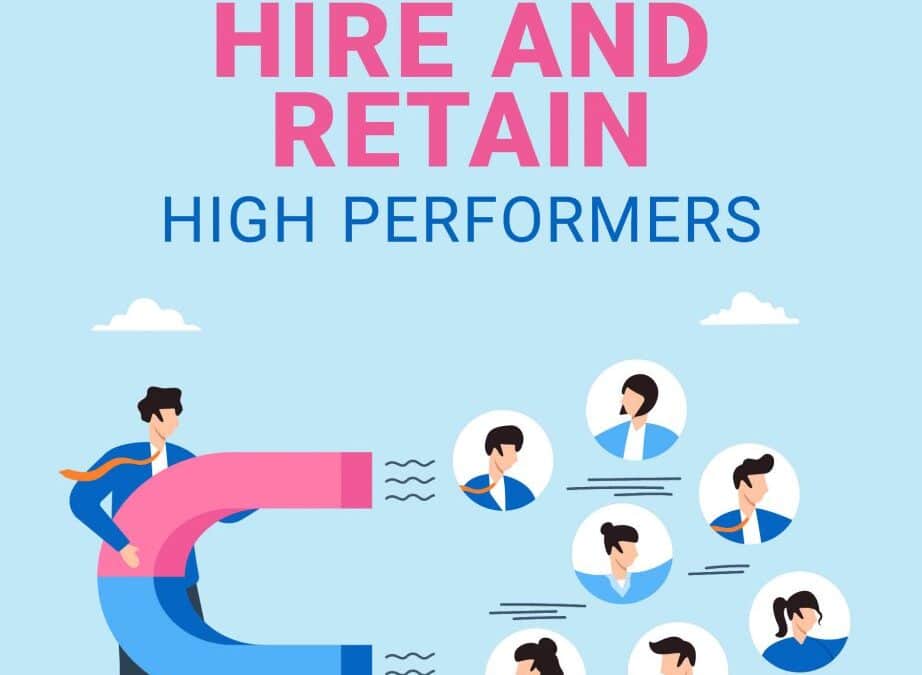
How to hire and retain top performers

I wrote this article for CEO Magazine to share five proven strategies for building a high-performance culture and retaining top talent. By setting clear goals, fostering accountability, and making swift decisions, you can ensure your team excels and stays committed to your organisation’s success.

original article > How to hire and retain high performers – Global (theceomagazine.com)

Discover five actionable steps to establish a high-performance culture to ensure your team excels and remains committed to your organization’s goals.
For over 20 years I have been recruiting senior executives for companies, from small privately owned businesses right up to global ASX100 organizations, and I have led teams of up to 750 personally.
I’m regularly asked by business owners and CEOs how to establish a culture of high performance, but more importantly, how to retain those top performers. If you can hire and keep the best possible team, this provides an incredible advantage over your competitors.

Here are five steps that business leaders can easily implement into their hiring and performance management process to achieve their organization’s goals.


1. Begin with the end in mind

Before you even go to the market, be extremely clear about what the role entails – what does success look like in the role? What are those mission critical outcomes that you want the employee to deliver?

Then you want to hire someone who has done it before, has done it well and is motivated to do it again. By ensuring that you, the recruiter and ultimately the candidates know exactly what is required and when, you can ensure that only high-performance individuals are considere


2. Develop a relationship of accountability

Once the person is hired, immediately develop a relationship of accountability. High performers want to be accountable. They want to achieve great results. They also want to be loved and rewarded for the work they do.

Good leadership requires a fine balance of love and accountability. Too much love makes a person/team become soft and they are likely to underperform. Too much accountability and a person/team becomes brittle and either they only focus on achieving their personal KPIs, or they leave.

By immediately setting up a relationship where your new employee is held tightly accountable to those key deliverables identified and communicated through the recruitment process, and then praising great performance, you will achieve excellent results

People are the key resource in a service business, so a lot of our focus is on the expertise of our people.


3. Have individuals and teams set their own KPIs

Follow the same process for your incumbent team, by supporting the setting of specific KPIs for both individuals and the team as a whole. By allowing the individual and/or team to set their own KPIs (assuming you agree and are happy with their targets), then they are more likely to take ownership and accountability for getting these things done.


4. Hire well and fire fast

If, within a few weeks, the agreed deliverables are not being met, then the person needs to be terminated. Most leaders (including myself) tend to retain poor performers for too long, hoping that they will ‘come right’.

The cost to your business through lost revenue, disgruntled customers and a negative team culture is simply not worth it. Make the tough call early and move them on.

Regularly ask your team members for three reasons why they love working for you.


5. Ask for feedback

Regularly ask your team members for three reasons why they love working for you. After all, they could easily be working for your competitor (or themselves) instead. You may be surprised by the variety of different responses each person gives, and what motivates them to stay.

Assuming that what they love is deliverable by you, make sure that they continue to get these things. Of course, it’s a two-way street and they need to continue to deliver to you what you love (for example, a high-performing team member who is a good culture fit). If they don’t love working for you, then either find out what will improve the situation, or move them on.

Through the introduction of these simple tactics, right from the top down, you will immediately see a tremendous improvement in performance and retention. The Chair should be following this process, both with the other board members and also the CEO.

The CEO should implement this process with their direct reports, and so on down the line. This is not something to be delegated to HR; it should be done by each hiring manager with each of their direct reports, plus teams as a whole.

Your organization deserves to both attract and retain the best performers in your industry and these steps will greatly enhance your ability to do so.